Capture the expense. Keep the reason.
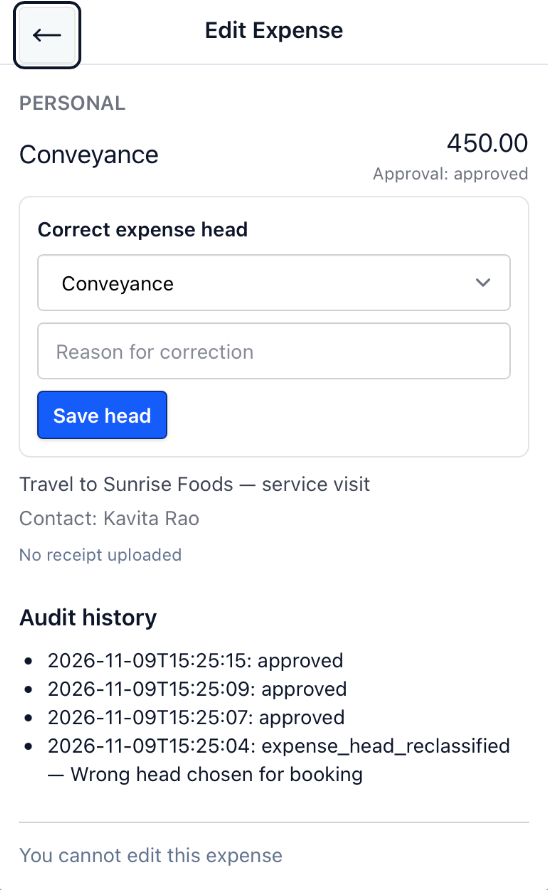
Record the expense with its supporting receipt and relevant work. Review the amount and correct its category without making the team recreate the whole entry.
What was it for? Who approved it? What came in? What’s still to settle? Keep money records close to the work that explains them.
At month end someone pieces it all together: a message, a bill photo, a bank entry and a half-remembered approval. Capture the context while the work is happening.
Record the expense with its supporting receipt and relevant work. Review the amount and correct its category without making the team recreate the whole entry.
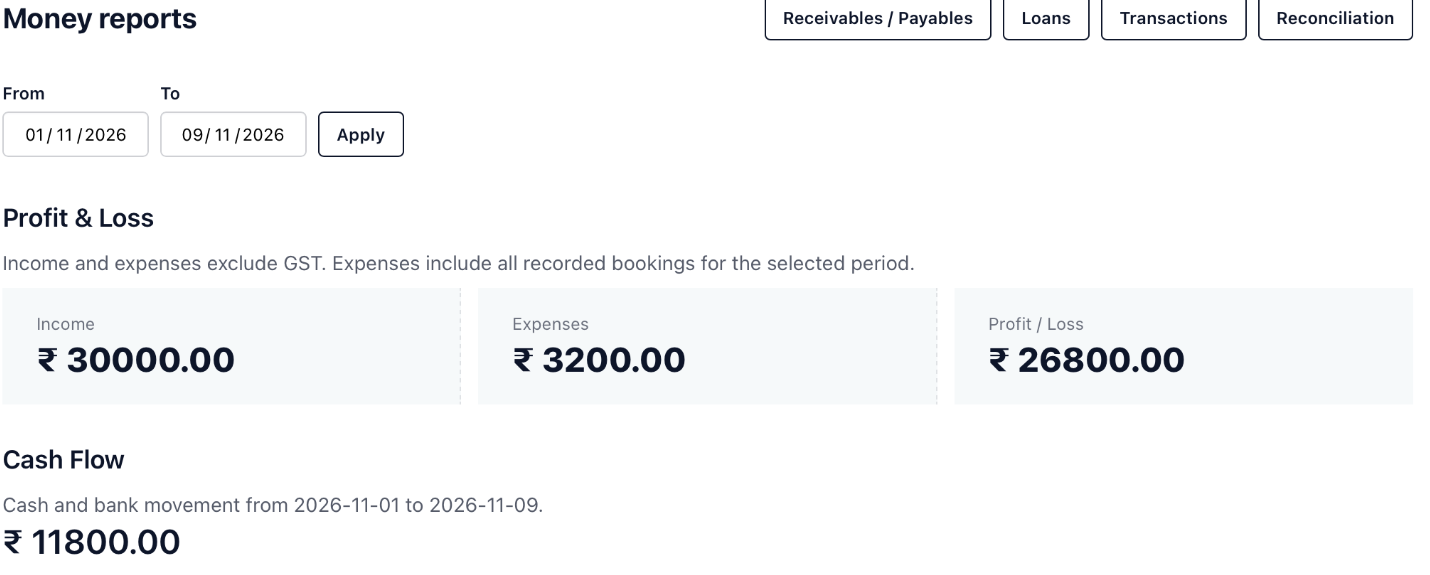
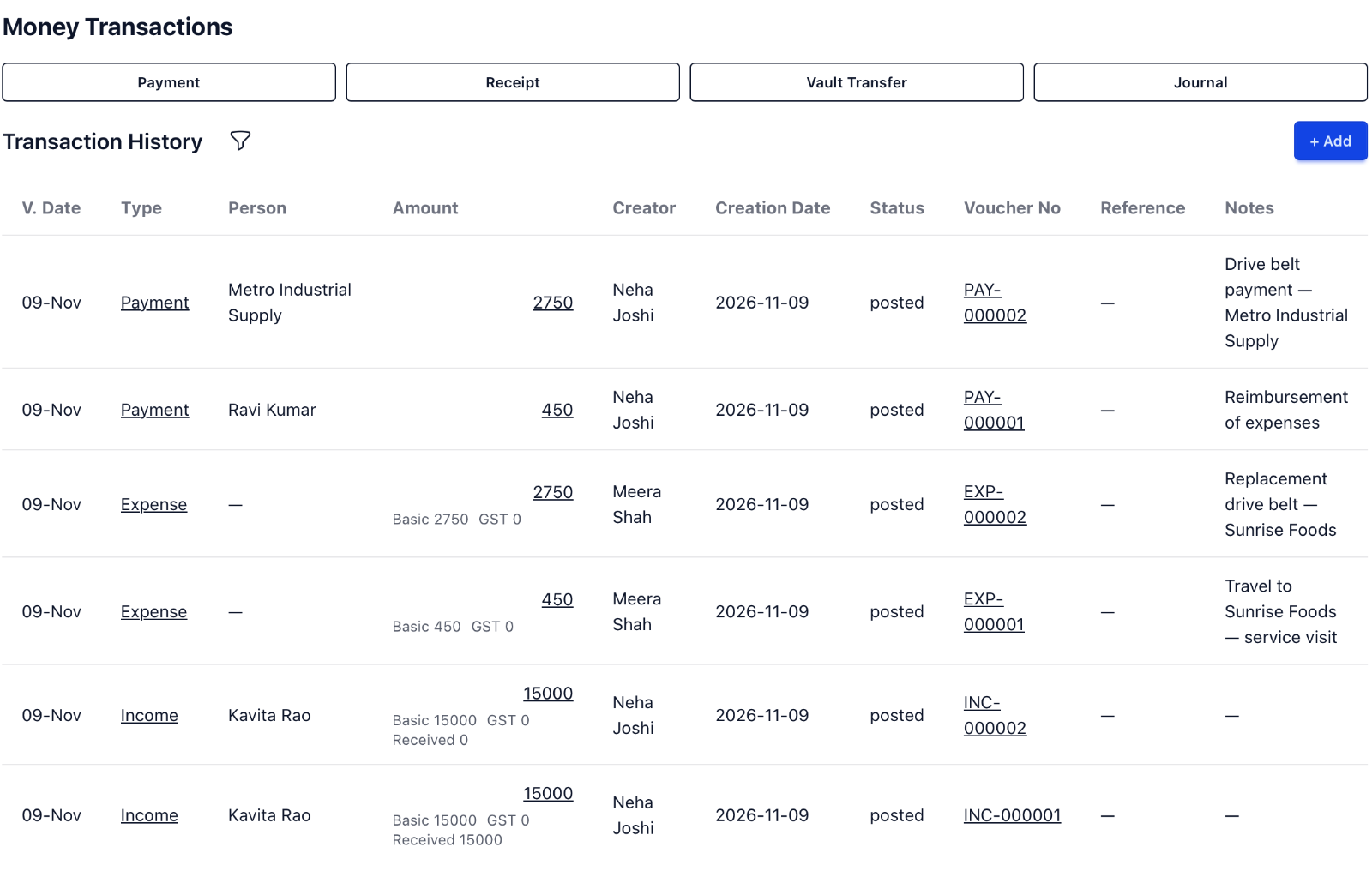
Income and expenses record what is booked. Receipts and payments record money coming in and going out. Tasks and Karmas can show their related records together.
Track bank, cash and custom balances, including amounts such as TDS to be settled later. Opening balances give your records a starting point.
Finance roles and work access control who can review money information. Keep operational context available without opening every record to everybody.
Demo workspace captures. Select an image to enlarge it.
What the business records as earned or booked.
The costs recorded for work and business activity.
Money recorded as received from a customer or another party.
Money recorded as paid to a vendor or another party.
The TDS vault keeps the withheld amount visible for later deposit. Recording the split does not mean the tax has already been deposited. This example illustrates the record structure, not a universal tax rate.
KarmaAxis records money. It doesn’t move it at the bank or file your taxes.
Record the income and the customer receipt as separate records, linked to the work they belong to. Your team can see what was booked and what actually came in, with the supporting context kept alongside it.
Illustrative scenario · fictional people and amounts
Follow an expense, customer receipt or vendor settlement through the work it belongs to.